2pi Learning, a Moroccan EdTech startup, is transforming the way children in developing countries learn STEM subjects. Founded by former teachers, the startup is on a mission to make math and science education fun, accessible, and effective for children aged 8–11. By combining interactive videos, quizzes, and games with proven teaching methods like Singapore Math, 2pi Learning is turning classrooms into exciting learning adventures.
But what sparked the idea for this startup?
The idea was inspired by the founders’ experiences as teachers in a system that struggles to deliver results. Watching students lose interest in learning pushed the team to find a better way to engage and inspire young minds.
2pi Learning is driving measurable social impact by making STEM education engaging and effective. “Through gamified lessons and animated content, we help children develop strong foundational skills while staying motivated,” shares Nabil.
The startup tracks its success through student progress, retention rates and feedback from both parents and teachers, ensuring their solution delivers tangible results.
By transforming how children learn math, 2pi Learning is equipping the next generation with the skills they need to thrive in the future job market.
But despite being driven by the best intentions and ambitions, being an entrepreneur in Morocco means tackling a dynamic yet challenging environment.
“We’ve been on this journey for two years, but the early stages were tough. The local ecosystem is still in its infancy, which makes it difficult to get funding,” explains Nabil Makboul, co-founder of 2pi Learning. “Things began to shift when we joined programs like Impact Beyond Borders, where we found valuable mentorship and guidance.”
As Moroccan founders, the team believes their country offers unique advantages for startups aiming to scale across Africa and beyond. “Morocco’s cultural diversity, its strategic position as a gateway to Africa, and its strong regional relationships provide a unique opportunity to scale solutions tailored for African and global markets,” Nabil states. “The competitive advantage of Moroccan startups lies in their ability to understand complicated local and regional challenges, which proves to be a unique opportunity to scale solutions that resonate both locally and globally.”
After participating in the 4-day bootcamp in Casablanca, 2pi Learning emerged as one of the top three startups from the Impact Beyond Borders program, earning a prize trip to Italy to connect with international networks and explore new opportunities.
The Italy Roadshow represents more than just an international trip—it’s a bridge to connect Africa’s emerging educational solutions with the European innovation landscape. The team hopes to gain insights and resources to help refine their growth strategy and accelerate their journey into new markets:
“We’re excited to meet organizations who share our passion for impactful education. This trip is an opportunity to learn from the European innovation ecosystem, build strong partnerships and bring our solution to a wider audience,” Nabil explains.
Recognized as one of the top startups in the Impact Beyond Borders program, the team is ready to bring engaging STEM education to children everywhere. With plans to expand beyond math into other disciplines, 2pi Learning is shaping a brighter, more accessible future for education in Africa.
Blog Post by Tommaso Lapiana, BeEntrepreneurs Volunteer
Impact Beyond Borders 2024 took place in Casablanca during the last week of October, a bootcamp designed to connect Moroccan start-ups with meaningful opportunities for growth. Organised by BeEntrepreneurs and supported by Sisal and GoBeyond, it brought together ambitious early-stage founders, experienced mentors, and key figures from both the local and Italian ecosystems.
Our call for start-ups drew more than 150 applications from across Morocco. From these, we selected 8 promising teams to join us for an intensive four-day programme. The bootcamp wasn’t just about equipping founders with knowledge—it was about creating connections: strengthening their networks locally, preparing them for the Italian ecosystem, and encouraging honest, constructive dialogue with leading voices in the entrepreneurial space. The schedule combined panel discussions, one-on-one mentoring, and sessions that allowed start-ups to pitch and receive direct feedback. Each day was carefully structured to balance group learning with individual support, ensuring every founder left with insights tailored to their challenges.
One of my favorite moments of the whole bootcamp was the peer-to-peer session with Omar Alami, founder of Ora Technologies, and Ismail Bergakh, CEO and co-founder of Wafr. These successful local founders brought a level of authenticity that struck a chord with participants, sharing real lessons from their journeys while challenging the start-ups to refine their thinking. According to participants’ feedback, their approach was direct, grounded, and precisely what aspiring founders needed to hear.
The bootcamp also featured high-level panels addressing early-stage start-ups’ key challenges, such as open innovation, fundraising, and internationalization. During the open innovation session, Mehdi Alaoui (CEO of LaStartupStation), Davide Orfanelli (Sisal), and Riccardo Leonardi (Relearn) explored practical approaches for start-ups to collaborate with larger organizations. For founders looking at international opportunities, Hiba Ritzk (EBRD), Francesco Pagnini (ICE Casablanca), and Lamiae Benmakhlouf (Technopark) shared actionable advice on building a bridge to European markets. The fundraising panel offered another critical opportunity for the start-ups to connect directly with investors. Leaders like Amine Boukouss (212 Founders and CDG Invest), Ming S. Kwan (First Circle Capital), and Reda Laklifi (Founco and DreamVC) listened to short elevator pitches, asked sharp questions, and gave immediate, focused feedback. For many of the founders, having this direct engagement with investors was both rare and transformative.
The programme ended with the Demo Day, where start-ups presented their work to a distinguished jury. The panel included figures such as Hiba Ritzk (EBRD), Sarrah Cherif D’Ouezzan (Sadara Technology), Farouk Lahbabi (CDG Invest), Zaid Benbya (TheAccelerator.ma), Moulay Hafid Amrani (AfriMobility), Davide Orfanelli (Sisal), and representatives from Startgate, including Zahra Nafaa and Kawtar El Outmani. The quality of the pitches demonstrated how far the founders had come in just a few days—more focused, confident, and clear in presenting their solutions. At the end of the day, three start-ups were selected as winners. Two earned a place in the upcoming roadshow in Italy, where they’ll engage with key players in the Italian ecosystem, while the third also received a €10,000 grant from Sisal GoBeyond.
What made Impact Beyond Borders 2024 special was its emphasis on connection. Start-ups didn’t just gain access to tools and frameworks—they engaged with real people: experienced entrepreneurs, investors, and ecosystem enablers who challenged them to think bigger, sharper, and more strategically. At the same time, the programme strengthened the ties within the Moroccan start-up community itself, creating an exchange that felt both collaborative and productive.
Our bootcamp is part of a larger mission to help emerging ecosystems grow by building bridges—between founders and investors, between African countries and Italy, and among the local innovators themselves. As BeEntrepreneurs, we believe these connections are where the real work begins, and I’m proud to have been part of this process.
Con la fine del 2024, si chiude anche questo entusiasmante biennio della storia di BeEntrepreneurs. Negli ultimi due anni, il cuore delle nostre attività è stato il progetto Startup Africa Roadtrip, ma dietro le quinte c’è molto di più: un viaggio collettivo fatto di passione, collaborazione e visioni condivise.
Grazie al supporto instancabile di volontari, volontarie e dei nostri partner in Africa e in Europa, abbiamo raggiunto traguardi che ci riempiono di orgoglio. E lo abbiamo fatto insieme, esplorando realtà diverse e imparando a guardare l’Africa per ciò che è davvero: un continente di straordinaria complessità.
Nel 2023 e 2024 abbiamo avuto la fortuna di lavorare in Kenya, Rwanda e Marocco. Tre Paesi ovviamente molto diversi sotto tanti punti di vista, con identità uniche, tre esperienze che ci fanno ricordare costantemente come l’Africa sia tutto il contrario di un blocco unico, come la si tende troppo spesso a rappresentare.
Riavvolgiamo il nastro e torniamo indietro a quasi due anni fa…
All’inizio del 2023, insieme a Joule ed ENI School of Entrepreneurship, abbiamo lanciato il programma Seeds for Sustainable Energy a Nairobi, concentrandoci sull’agribusiness e sulla sostenibilità. È stata una settimana intensa, ricca di incontri e idee che hanno piantato semi di cambiamento. Potete ripercorrere questa esperienza andando leggere il recap di quella settimana qui.
Ad agosto invece, dopo intensi mesi di scouting ed organizzazione in collaborazione con incubatori, startup ed università locali, siamo volati a Kigali, in Rwanda, per il bootcamp di Startup Africa Roadtrip. Qui, 25 startup ci hanno stupito con soluzioni innovative a sfide globali: dall’educazione all’agritech, dal fintech alla femtech, fino al turismo e all’economia circolare. Ogni giorno è stato un’occasione di scambio, tra pitching sessions, business plan e momenti di apprendimento reciproco. (Scopri di più qui).
Il 2024 è stato l’anno del roadshow italiano, che, come avete ormai imparato, segue sempre il bootcamp nel paese africano selezionato per il programma.
Le cinque startup selezionate a Kigali hanno vissuto una settimana unica tra Milano e Bologna, ospiti del nostro network di partner. Hanno visitato aziende italiane, partecipato a sessioni di networking e ricevuto feedback preziosi per far crescere i loro progetti. Il tutto culminato con un evento pubblico alla Fondazione Cariplo, un momento speciale per celebrare la strada fatta insieme. Scopri i dettagli qui.
E non è tutto: il 2024 si è chiuso con la collaborazione con Sisal – Go Beyond ha dato vita a Impact Beyond Borders. Un’ulteriore opportunità per startup questa volta marocchine, di lavorare sui loro progetti e presentarli poi nel 2025 all’ecosistema dell’innovazione italiano.
Mentre ci lasciamo alle spalle un biennio intenso, il prossimo è già iniziato! Le idee non si fermano, e non vediamo l’ora di farvi scoprire dove ci porterà il 2025.
Un grazie speciale va a tutti i partner che da anni credono in noi e rendono possibili questi progetti. La vostra fiducia è il nostro motore.
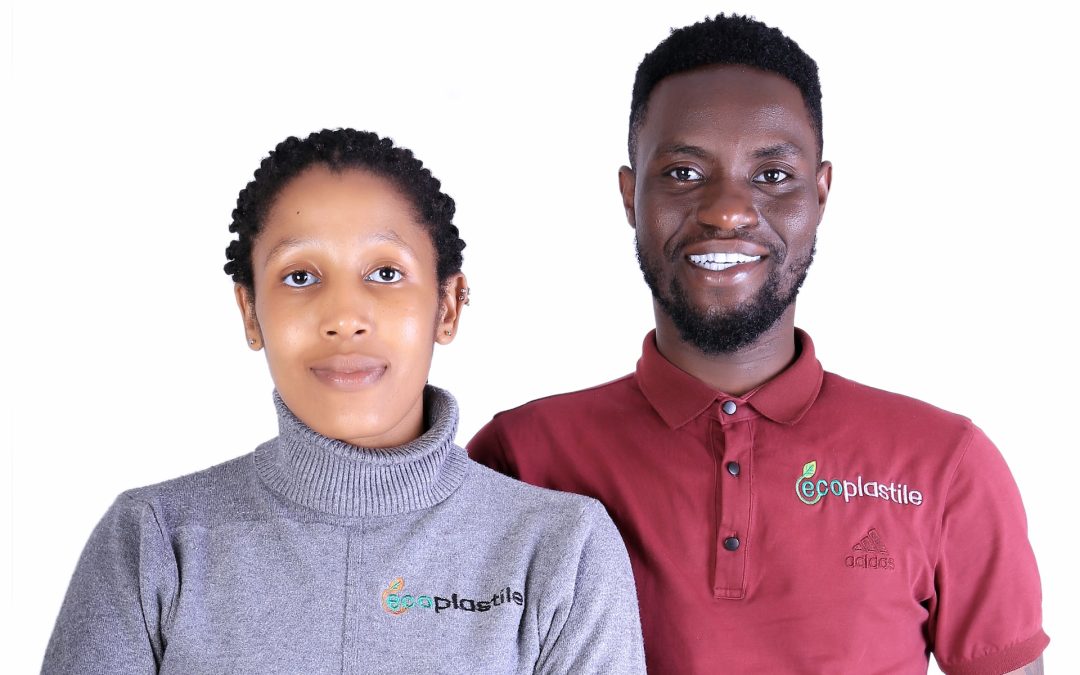
ECOPLASTILE: on a mission to revolutionize the industry of recycled building materials
Ecoplastile Limited, founded by Franc Kamugyisha, is a startup that aims to solve the problem of plastic waste management in Uganda. Ecoplastile was founded in 2020 to address the plastic and housing crisis in the country by using recycled plastic to create innovative and sustainable building materials. With a team composed of eight key members, including Dr. Fabio Huether as Chief R&D Officer, Gerevazio Ahimbisibwe as Chief Financial Consultant and Mildred Nahurira as Head of People & Culture.
But what sparked the idea for this startup?
“My inspiration dates back to childhood when we had to dispose of waste in nearby trenches early in the morning or late at night because we couldn’t afford waste collection services” – says Franc, founder of Ecoplastile.
After working in the construction industry for five years, Franc closely observed the cost, performance, and safety of construction materials as the country struggled with more than 600 metric tons of plastic waste per day, of which only 6% was recycled.
“According to the United Nations Environment Program, every minute, the equivalent of one garbage truck of plastic is dumped into our ocean. Africa’s recycling rate is 4%, compared to 32% in America and 48% in Europe”.
Being an entrepreneur in Uganda means navigating in a dynamic and often challenging environment: “It requires identifying opportunities and innovating to solve local problems despite various hurdles. With fewer peers to learn from, personal motivation is crucial. For many, entrepreneurship here is driven by necessity”– affirms Franc that listssales and distribution as the main challenges for his business, as well as the search for raw materials, which cause significant operational difficulties.
Ecoplastile is generating a significant social impact, “empowering micro, small and medium African enterprises, along with their million clients, to monetize recyclable materials and get access to products and services climatically resilient”.
Franc’s goal is to close the loop on1 billion tons of recycled materials per year, to decarbonize 100 million homes and to eliminate 1.5 billion tons of carbon emissions by 2030. “We’re introducing two new hardware products: the Dump Proof Membrane (DPM), made entirely from 100% recycled plastics, projected to contribute 15% to our operations by 2030, and post-consumer recycled plastics (rPlastics), in high demand among consumer plastic packaging brands like Unilever, expected to account for 25% of our operations by 2030”.
Through initiatives like the Next Generation Africa program, Ecoplastile has gained invaluable mentorship and guidance, propelling its growth and impact. With ambitious goals to close the recycling loop, decarbonize homes, and eliminate carbon emissions, Ecoplastile is poised to make significant strides towards a more sustainable future, one recycled plastic brick at a time.
Empowering African Women: LUNA’s Mission to Transform Women’s Health
LUNA is a startup founded by Berabose Aline Joyce, who serves as CEO. With a small but dedicated team consisting of a full-stack software developer, Christian, an expert in React Native, CMS and API deployment, an operations team consisting of Jules and Samira, a medical and wellness team, and Chibudu Nyiro as data analyst, LUNA is prompt to revolutionize the women’s health sector in Africa.
“LUNA was inspired by the need to provide African women with better access to comprehensive and personalized healthcare services, particularly focusing on menstruation, menopause, maternal, and sexual health”. Berabose Aline Joyce was inspired by her personal experience with endometriosis and the lack of women-centered care, as well as her work in the field of sexual health, where she observed the gap in treatments aimed at women and the stigma surrounding these issues.
LUNA takes on various challenges that African women face, such as late diagnosis of conditions like PCOS, endometriosis, infertility, and menopause: “We aim to improve access to sexual and reproductive health services, combating stigma and misinformation surrounding these topics”– says the founder.
Alongside these challenges, Berabose must also tackle those related to the business she has created. Being an entrepreneur in Rwanda means moving in a vibrant and rapidly changing environment, taking advantage of opportunities to innovate and grow.
Berabose’s entrepreneurial dream is for LUNA to become the leading provider of women’s health services in Africa, positively affecting the lives of millions of women on the continent: “We aim to launch an enhanced platform, secure regulatory approvals, expand partnerships, and refine our business model to reach more women”.In ten years, LUNA envisions itself as the platform of choice for women’s health in Africa, with a full range of services and a strong user community.
This ambitious vision has been greatly supported by their journey with the Next Generation Africa program, which Berabose describes as transformative, providing invaluable support, mentorship, and resources to help grow and scale the venture. Berabose recommends the Next Generation Africa program for three main reasons: “it offers unparalleled opportunities for networking, learning, and growth, with access to experienced mentors, funding opportunities, and a supportive community of fellow entrepreneurs.”
With the support of initiatives like the Next Generation Africa program, LUNA is poised to make significant strides towards its ambitious goals, empowering women and transforming lives across the continent. As they prepare to showcase their innovative solutions at the June 2024 Italian Roadshow, LUNA is ready to embark on a journey of collaboration, partnership, and international expansion, shaping the future of women’s healthcare in Africa and beyond.


Recent Comments